
Los Alamos County Police Blotter
The county itself offers no multi-day booking feed. Two news outlets fill that gap. The Los Alamos Daily Post Police Blotter and the Los Alamos Reporter's police category both cover LAPD material as independent papers. Neither is run by the detention center. Neither is a complete custody list either.
The Daily Post keeps a dedicated blotter landing page, and single posts often span a stated set of dates. Publication can lag behind the span itself. The Reporter mixes police-category items with weekly LAPD reports. One weekly report covered July 22 through July 28, 2026, and went up on July 30. It also left out summons recipients.
Use the date range: a headline date, an arrest date, and a posting date can all differ inside one entry. Write all three down before comparing reports.
Read Los Alamos Arrest Reports
Search by report range, not by the newest headline. Outlets group incidents differently. A name can show up in one archive yet miss the other entirely, so treat neither as the official custodian.
- Open the Daily Post blotter or Reporter police category and note the date span named in the item.
- Find the arrest date inside the report, then compare the person's full name, agency, and alleged offense.
- Record whether the item came from LAPD and whether it excludes summonses or other categories.
- For current custody, contact Los Alamos Detention Control rather than relying on the article.
- For a report, booking record, or photo, contact LAPD Records or submit a county IPRA request.
- Use the correct court after filing to learn the disposition.
Think something happened today? Skip the weekly wait and use the Arrests Last 24 Hours fallback for faster Los Alamos coverage.
Los Alamos Blotter Entry Fields
Los Alamos reports usually identify an incident clearly. Fields still shift from post to post. There is no fixed roster schema behind them. A photo may be missing, may come from an agency release, or may show a scene rather than a booking shot.
| Possible field | How to read it |
|---|---|
| Name | Used for listed arrests; check spelling and avoid assuming identity from a partial match |
| Arrest date or time | The event time, which may be earlier than publication |
| Agency | Usually LAPD in the local weekly reports |
| Alleged offense or warrant | The report-stage charge |
| Location or brief narrative | Context selected for publication, not a complete case file |
| Photograph | Varies; never assume the image is a booking photo |
| Summons information | May be omitted, as the Reporter states for its weekly report |
Don't count on booking numbers here. The news views publish no consistent set of booking numbers, state tracking numbers, bond details, or release status, so those fields cannot be promised.
Weekend Los Alamos Arrest Reports
Weekends and holidays stretch the gap. A Los Alamos arrest then waits longer for the next range-based story. The Daily Post and the Reporter follow no set publication schedule. A Monday update can't be promised. Treat the weekly label as an editorial range rather than a detention-system clock.
Custody question right now? Call Detention Control at 505-662-8235. Police reports go through LAPD Records at 505-663-1741 or police-records@losalamosnm.gov. A newspaper archive helps afterward. But a county contact answers the live question.
For broader countywide context, start with the official Los Alamos Police Department page. It covers law-enforcement and detention operations.
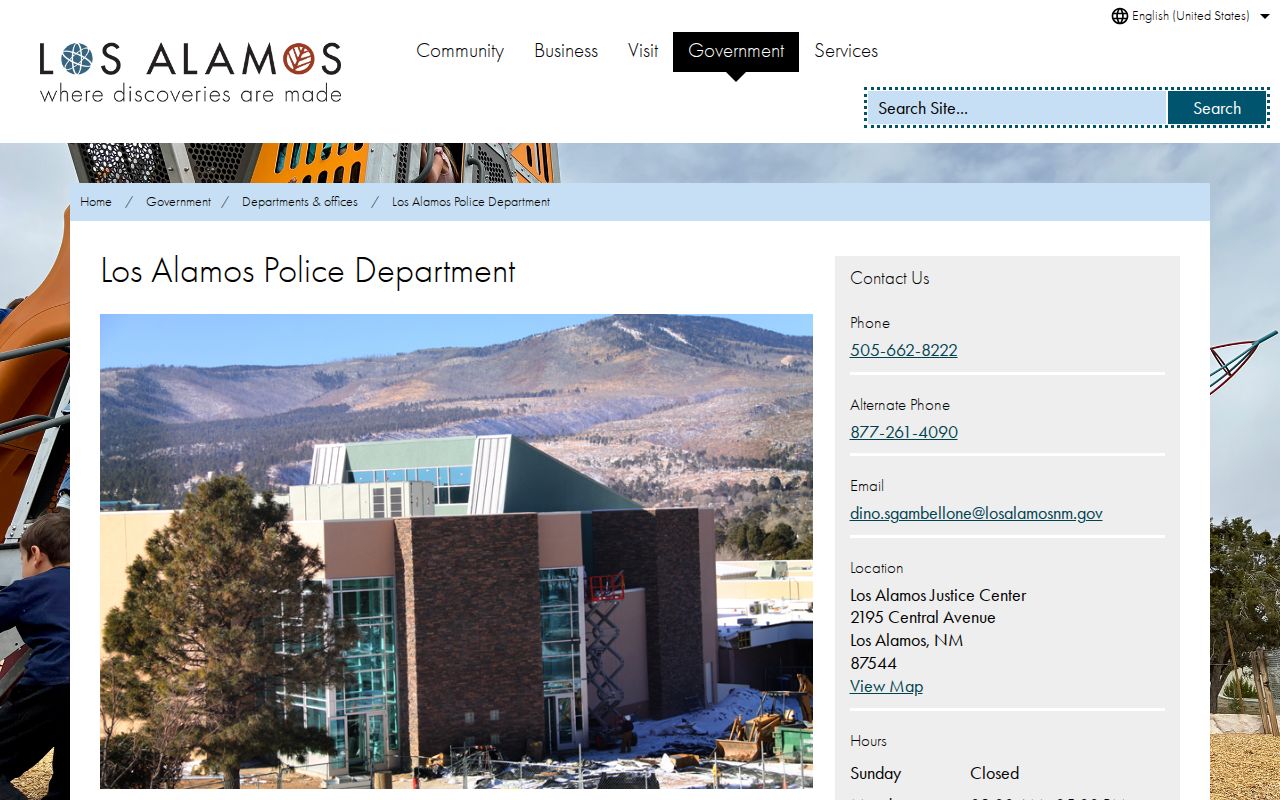
The county page maps the shared LAPD structure, not a public arrest log.
Los Alamos Arrest Archives
News archives and government retention follow separate rules. The county's own schedule files jail inmate records under 1.21.2.902. Destruction comes five years after file closure. That clock governs agency files only. A newspaper decides separately how long its articles, images, and old URLs survive, and how corrections run.
Need an older official item? Keep the request narrow. Send it to LAPD Records or the County Records and Information Management custodian at inspect-records@losalamosnm.gov, listing the full name, approximate date, Los Alamos Detention Center, and any report or booking number. State the exact artifact sought. Ask whether the file is active, warehoused, transferred, or destroyed under the schedule.
The New Mexico retention schedule supplies that official rule.
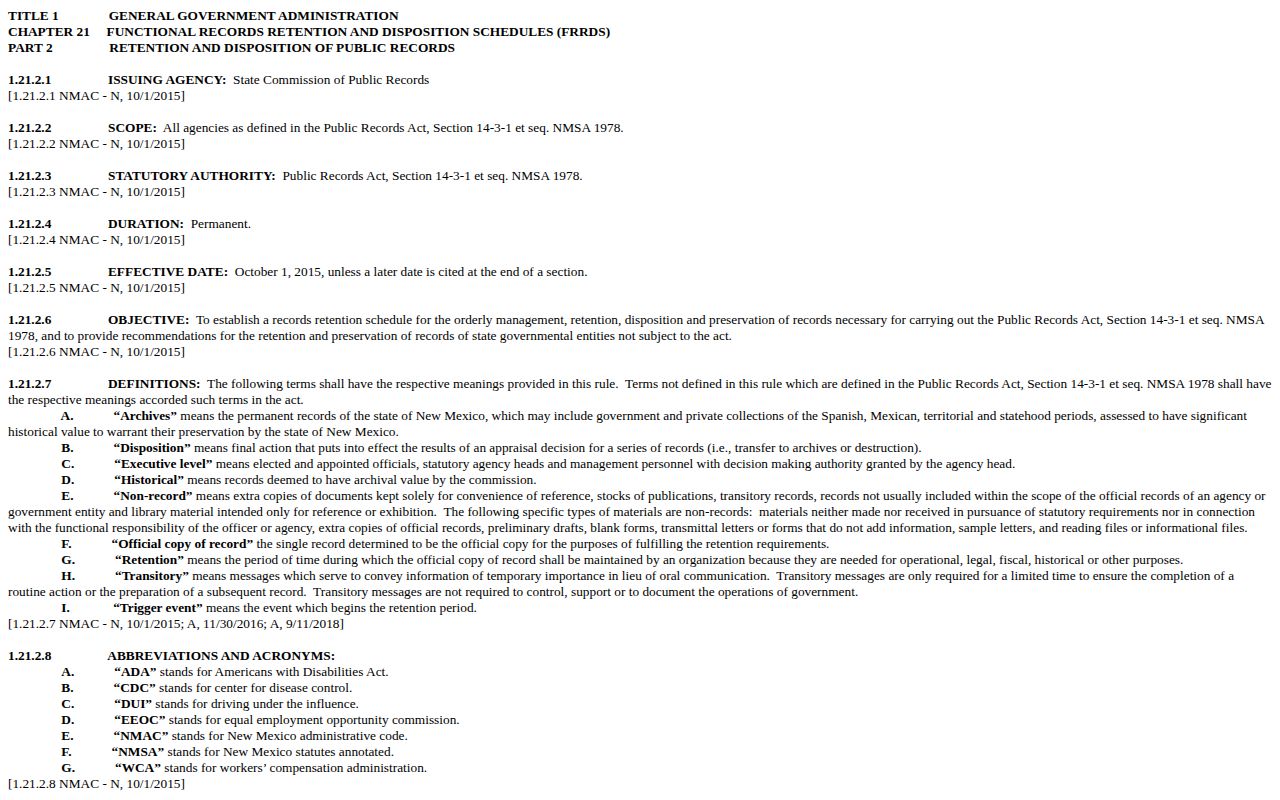
That schedule rules agency files, not news reports.
Why Los Alamos Photos Vary
Older Daily Post reporting tied arrest-photo gaps to problems with police-records software. That explains uneven images. One report carries a photo; the next has none. It sets no current county photo policy and cannot prove an image was never taken.
New Mexico law treats photographs as biometric identifiers. Covered bookings require collection at qualifying facilities. Collection, disclosure on request, and online publication remain three separate acts. Request a specific booking photograph through the records channel, and expect lawful redaction or withholding.
Blotters Versus LAPD Crime Data
LAPD's annual crime-statistics materials note a switch from UCR to NIBRS in April 2021, an incident-based system built for crime statistics. The county DWI Program adds context too. It describes checkpoints, saturation patrols, warrant enforcement, education, and underage-drinking work. Neither source counts daily bookings.
A blotter lists selected people or events for an editorial period. NIBRS groups reported incidents under statistical rules. Enforcement announcements spotlight chosen operations. Blend the numbers together and you invent a false arrest total, so use each source only for the question it actually answers.
Verify a Los Alamos Arrest
Need to confirm a name you saw in the blotter? The countywide Los Alamos recent-arrests hub lays out every official route, from record requests to custody checks, booking photos, warrants, and court files. Save the details first. That means the outlet, the report range, the publication date, and the exact wording used. Those notes make the follow-up far easier. Next, go after the agency record itself. The court file can fill in what the news piece left out. One more thing about old articles. A person released long ago may still turn up in them. A live custody check can still return nothing. For state custody, NMCD's offender search is the right tool, not the county news archive.
Archive caution: an old report shows only what that source printed at that time. It says nothing about current custody or the final outcome.
Public Record Search
Sponsored Results